


There is a familiar rhythm to British public policy. A popular campaigner identifies a real unfairness. Ministers sense an easy win. Special advisers spot a headline. A complex administrative system is reduced to a slogan. Then the professionals who actually have to run the thing are left to pick up the pieces.
That, in essence, is the danger now facing council tax collection.
Martin Lewis has done immense public good by forcing consumer issues into the political mainstream. He has helped millions of people understand bills, benefits, savings and household costs. His intervention on council tax administration is therefore almost certainly well intentioned. The problem is that good intentions are not enough when the machinery being altered is one of the main funding routes for local public services.
The government’s proposed reforms sound attractive at first hearing: 63 days to resolve arrears before formal enforcement, a duty to agree sustainable repayment plans where possible, 12 monthly instalments by default, and a £100 cap on liability order costs. Presented as consumer protection, it sounds humane. Seen from inside a council revenues team, it looks much more troubling.
At Visionary Network’s Monday Discussion Group, a regular forum of experienced revenues and benefits professionals from councils, housing, advice, policy and local government finance, the question was framed simply: is this a fairer system, or a bill councils cannot afford to send?
The answer from those who actually run the system was uncomfortable. The concern is not that councils object to treating residents fairly. Quite the opposite. Good revenues and benefits services have spent years moving away from crude enforcement and towards early engagement, affordability assessments, welfare advice and realistic repayment plans. The danger is that the proposed reforms may delay the very contact that prevents debt from becoming unmanageable.
As I said during the discussion, council tax is not a credit card bill. It pays for care, waste collection, children’s services, homelessness support and the basic running of local government. If you delay contact for two months, you do not make the debt disappear. You make it bigger, harder to recover and more frightening for the resident when the letter finally arrives.
That was the clear message from practitioners at Visionary Network’s Monday Discussion Group. Contributors warned that the 63 day proposal risks mistaking delay for support. Several practitioners explained that proactive contact already happens before formal recovery. Councils do not simply rush people to court after one missed payment. In many areas, residents are contacted, reminded, offered revised instalments, signposted to support and asked the crucial question: are you struggling, or are you simply not paying?
This matters because early reminders are not just enforcement notices. Used properly, they are prompts. They tell someone that a payment has been missed while the problem is still small enough to fix. A resident who is one instalment behind may be able to recover. A resident who is two or three months behind may not.
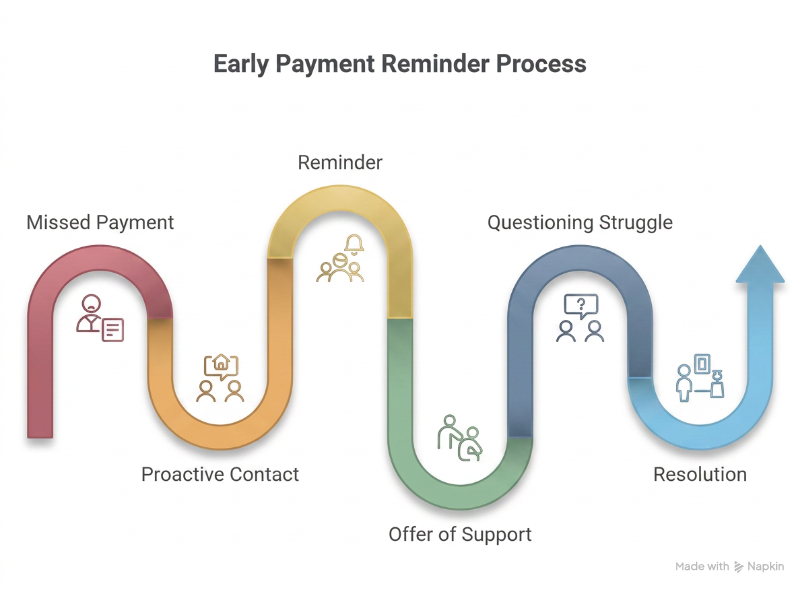
Every day a council tax bill is unpaid, the amount owed grows. The council cannot withdraw the service. The household does not stop receiving local services. The account simply falls further behind. Anything that discourages early engagement is likely to cause a collection problem. It may not help vulnerable residents either, because many people wait for the first formal letter before contacting the council.
Rachael Walker, Visionary Network’s Director of Policy, put the concern plainly: “These changes do not appear to be based on the reality of the system. They look like political wins. If you shorten the time left to repay arrears, instalments go up. When instalments go up, more arrangements fail. That is not debt prevention. It is debt deferral.”
That is the central flaw. The reform assumes that more time before enforcement equals more protection. But in council tax, delay can make the problem worse. If April and May are missed, and contact is pushed back, the household may face a larger debt over a shorter remaining period. For low income households, that is not breathing space. It is a steeper hill.
The move to 12 monthly instalments by default is another example of a policy that sounds simple until it meets real households. The option to pay over 12 months has existed for years but take up remains limited in many areas. Many residents like having February and March free from council tax instalments, because those months are used to manage Christmas debt, utility bills, rent pressures or other household costs.
The public may not always read council tax bills closely. Martin Lewis can say on television that 12-month instalments are available and many will listen. But that does not mean the state should redesign the default system without understanding why residents have not chosen the option already.
Kevin Stewart, Visionary Network Director, said the reforms reflect a wider misunderstanding of what council tax has become: “Council tax was designed as a property tax, but it is now being used to hold up local authority finances under enormous pressure. Councils collect it well because they have to. If government handcuffs the people who collect it, the result will not be fairness. It will be weaker services, larger arrears and more pressure on the same residents ministers say they want to protect.”
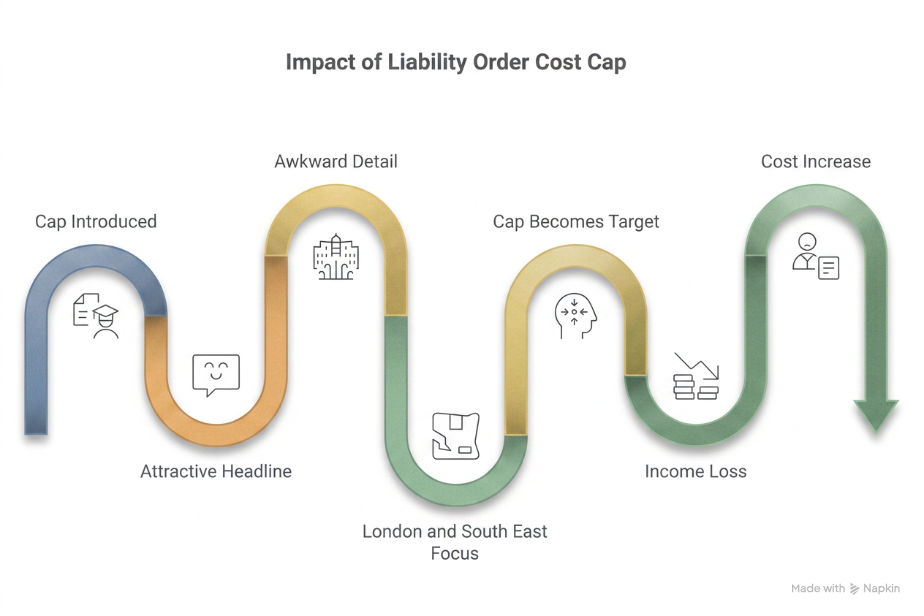
Then there is the £100 cap on liability order costs. Again, the headline is attractive. Nobody likes court costs being added to debt. But the detail is awkward. Most councils already charge below £100, while higher charges are concentrated more heavily in London and parts of the South East. The risk is that a cap becomes a target. Councils currently charging less may face pressure to increase charges up to the maximum, while authorities with genuinely higher costs lose income.
In other words, a reform sold as reducing costs could increase them for some residents.
That is what happens when policy is made through headlines. A cap sounds tough. A longer breathing period sounds compassionate. Twelve monthly instalments sound modern. But public administration is not a television phone in. It is a set of legal duties, payment cycles, software systems, court processes, staffing limits, postal costs, digital exclusion problems and human behaviour.
The most troubling aspect is the apparent willingness of government to give greater weight to celebrity pressure than to professional evidence. The people who understand council tax are not always household names. They do not have prime time shows. They do not have millions of followers. They are the managers, recovery officers, benefit specialists, policy analysts and local government finance officers who deal every day with the difference between “can’t pay” and “won’t pay”.
If young and inexperienced special advisers treat those professionals as obstacles to a good press release, residents will suffer. Local government has seen this pattern before. Ministers announce compassion. Departments write rules. Councils absorb the cost. The public discovers later that the reform has created backlogs, confusion, extra letters, poorer cash flow and more complaints.
There is a better route. If government wants fairer council tax collection, it should fund proper early intervention. It should strengthen local welfare advice, improve council tax support schemes, support income maximisation, invest in digital systems that residents can actually use, and give councils the resources to review affordability properly. It should distinguish between households in crisis and those who simply avoid payment. It should consult the people who run the system before redesigning it.
Nobody sensible argues for harsh collection against vulnerable residents. The best councils already know that unaffordable demands fail. They accept realistic arrangements. They work with advice agencies. They use hardship funds. They nudge early. They prevent small arrears from becoming large ones.
That is precisely why this reform is so risky. By delaying contact and compressing repayment, it may produce the reverse of what Martin Lewis hoped to achieve. It may leave struggling households deeper in debt, councils with weaker cash flow, and local services with less money.
The policy may have been born from compassion. But compassion without operational understanding is not reform. It is theatre. And council tax is too important to be rewritten as a celebrity backed performance for ministers in search of applause.